Sunday, May 12, 2019

Omer 2019 Day 23: Monarch Butterflies


Omer 2019 Day 23: Gevurah in Netzach, Strength in Endurance
Monarch Butterflies
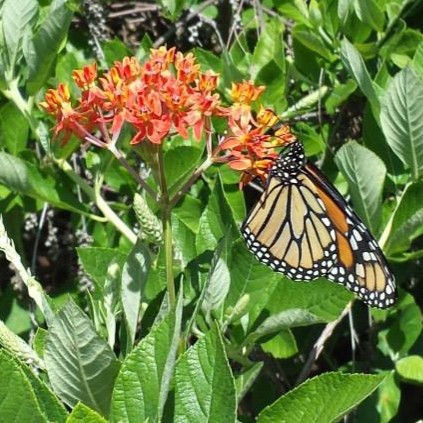
Monarch butterfly at the US Botanic Garden, Summer 2014.
I named her Ruth. I don't remember why.
When we think of "strength" and "endurance," we don't often think of butterflies. Often, these delicate creatures are associated with positive change, beauty, and grace, but what you may not know is that monarch butterflies exhibit a tremendous amount of strength and endurance in their multi-generational migration events.

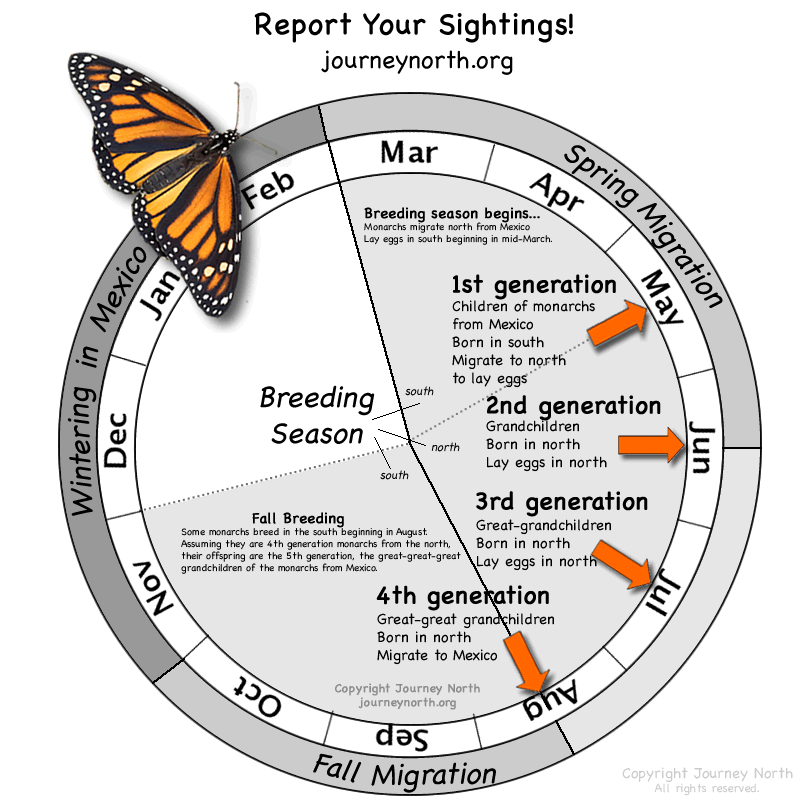
In the fall, adult monarch butterflies begin a migration of up to 3,000 miles south to avoid the cold, harsh winters of North America. Individuals in the central and eastern US migrate southwest to central Mexico, and butterflies in the western US migrate to California. Once they reach their "overwintering" grounds, adults enter a reproductive diapause - a period of time where reproduction stops - and focus on surviving the winter by staying in a state similar to hibernation. At the end of winter, in late-February or early-March, breeding season begins and the adults begin to travel north again, laying eggs along the way. This generation dies around mid-May, and the next generation takes over, also moving northward and laying eggs. This repeats for up to 4 generations, with the final generation born in the most northern parts of monarch territory, then following seasonal cues to migrate south as autumn approaches.

Not only are these incredible insects strong enough to endure a trans-continental migration every year, but the individuals that do it are not the same ones that did it the year before! Pretty crazy, huh?

This year's animal Omer is a collaboration between myself and my friend Halli, a PhD in animal science. Thank you for counting the Omer with us!

Saturday, May 11, 2019

Omer 2019 Day 22: Blue Whales


Omer 2019 Day 22: Chesed in Netzach, Love in Endurance
Blue Whales
Photo by Thomas Kelley on Unsplash
Blue whales migrate across the globe to give birth to their young in a safe, hospitable environment. However, moms then have to migrate back to the nutrient-rich parts of the ocean, which means they're traveling (1) alone, (2) with an infant, and (3) without any food along the way, all in the name of love for their offspring.

This year's animal Omer is a collaboration between myself and my friend Halli, a PhD in animal science. Thank you for counting the Omer with us!

Friday, May 10, 2019

Omer 2019 Day 21: Canadian Geese


Omer 2019 Day 21: Malchut in Tiferet, Leadership in Beauty
Canadian Geese
Image by Manfred Antranias Zimmer from Pixabay
If you live in North America, there's a decent chance that you've seen the characteristic V-shaped formations of Canadian geese that streak across the sky during the autumn and spring months. As most people know, these animals migrate south to avoid the harsh northern winters, then they return north as temperatures begin to rise in the south. If you're into physics, you've probably guessed that this characteristic flight strategy minimizes wind resistance and maximizes flying efficiency. (If you've ever seen the movie The Mighty Ducks, you'll recognize it as a winning hockey strategy too). But what you may not know is that typically it is the younger geese that lead the way. Older geese fly toward the back of the flock, with the younger geese toward the front, to teach their offspring how to find their way. This beautiful act of leadership can teach us that it's not always about showcasing your knowledge, but rather acknowledging the value of teaching others how to find their way.

But make no mistake: geese are not saintly leaders. All that honking you hear overhead? That's grandma goose insisting that "had we just stopped and asked for directions, we wouldn't be driving in circles, and still might be able to make the all-you-can eat buffet!"

This year's animal Omer is a collaboration between myself and my friend Halli, a PhD in animal science. Thank you for counting the Omer with us!